
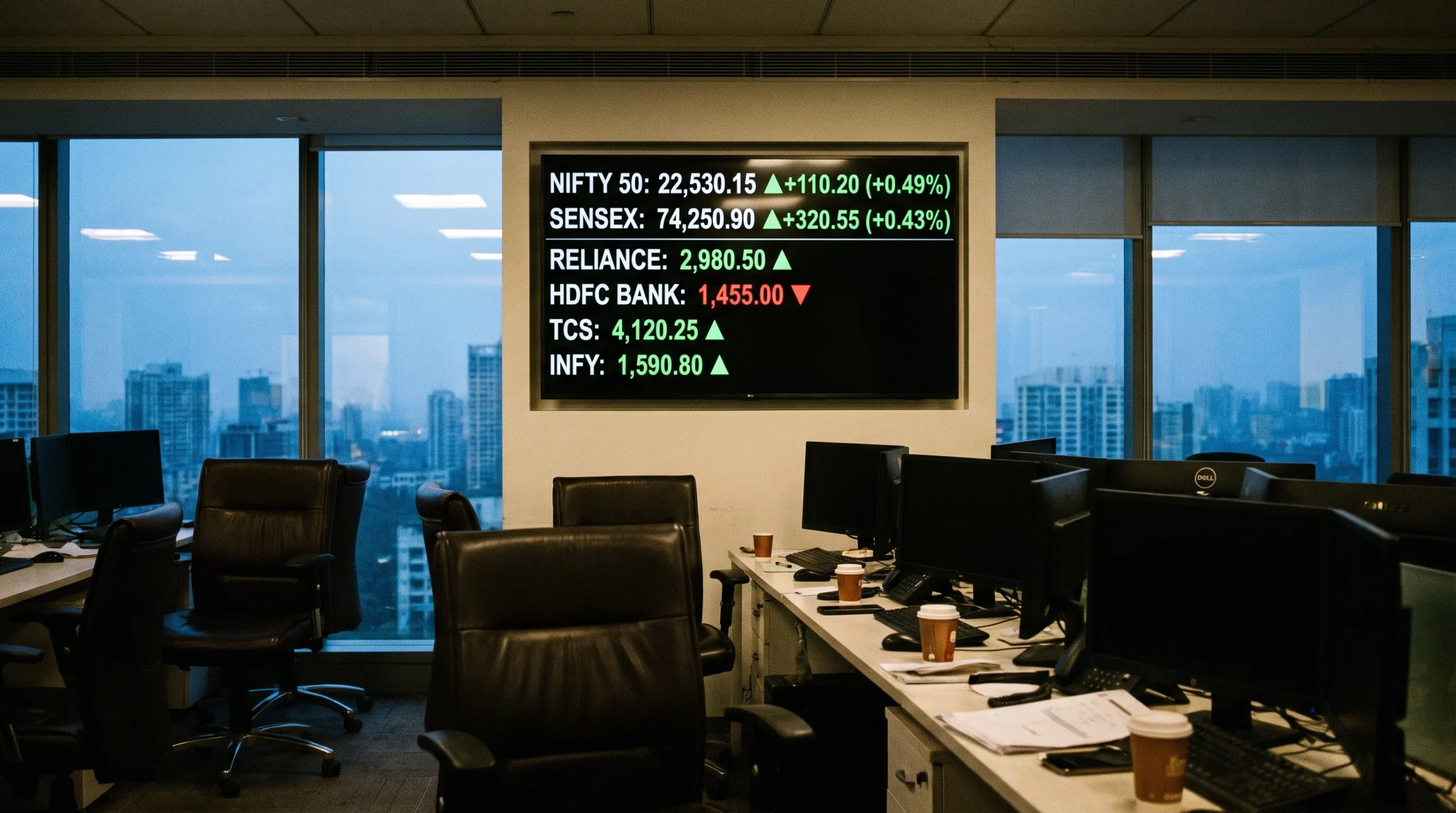
Key Factors to Watch: 10 Influences Shaping Monday’s Stock Market Movement
The Indian stock market experienced a significant downturn recently, marked by the Sensex hitting a new 52-week low and the Nifty crossing critical technical thresholds. Concurrently, foreign institutional investors (FIIs) have spurred a wave of sell-offs, associated with escalating bond yields and elevated crude oil prices, which have unnerved investors. Despite a partial recovery in the latter part of the trading session, the markets closed substantially lower, with the Sensex declining by approximately 571 points to finish at 71,910 and the Nifty 50 dropping nearly 199 points to close at 22,422. This mass liquidation led to a reduction of ₹5 lakh crore in total market capitalization on the BSE, decreasing it below ₹467 lakh crore.
The primary drivers behind this sell-off include global economic concerns, particularly rising bond yields, which have reached multi-year peaks, and a cautious domestic sentiment ahead of the anticipated Q2 earnings reports and the Reserve Bank of India’s (RBI) policy meeting next week. Analysts signify that the upcoming earnings season may not replicate the performance seen in Q1, given the expected moderation in operating costs, raising apprehensions about the growth trajectory for fiscal 2026-27. Market sentiment remains predominantly bearish, with over 2,500 of the 3,707 stocks listed on the NSE recording declines in the latest trading session.
In contrast, certain sectors displayed resilience, with stocks such as Schneider, Inox India, and IDBI Bank experiencing notable buying interest, suggesting selective accumulation amidst widespread market fears. Despite these positive signals, the overall atmosphere remains trepidatious, urging investors to adopt a cautious approach. Retail investors might be inclined to reconsider portfolio allocations, focusing on long-term positions, while monitoring the prevailing trends closely before making further commitments.
• WEALTHOVA INSIGHTS
The current market conditions present both risks and opportunities for retail investors. While heightened volatility may warrant a defensive stance, selectively accumulating quality stocks could be beneficial during this dip. Vigilance regarding upcoming economic indicators will be crucial in navigating this turbulent landscape.
Disclaimer: Market insights and analyses on Wealthova are strictly for educational and informational purposes and do not constitute financial or investment advice. Please consult a SEBI-registered financial advisor before making investment decisions.
Source: The Economic Times
(Expert Note: This intelligence brief was structured and verified by the Wealthova editorial desk.)